
When parents assess socialisation in online schooling, they often look first at extracurricular activities and in-person events. This makes sense: these are visible opportunities for children to meet and spend time together.
But they reveal only part of the picture.
An activity calendar can show what happens beyond academic lessons. It cannot tell parents whether students feel a sense of belonging, participate meaningfully or build relationships through the ordinary rhythm of the school week. To understand an online school’s approach to socialisation, parents also need to look at the day-to-day learning experience.
Why Do Parents Look to Activities First?
When parents picture socialisation at school, they may draw on what they know from a physical school setting: break times, sport, clubs, outings and other occasions when children are physically together. These experiences are familiar and easy to identify.
Extracurricular activities and in-person events are also among the most visible parts of an online school’s social offering. A parent can look at a list of clubs, see photographs from a recent outing or count how many in-person events take place each year.
As a result, these visible activities can become the main measure of whether an online school provides “good socialisation”. If the school offers them, it appears to have addressed the concern.
Much of the wider conversation about online schooling reinforces this idea. Explanations of how online students socialise often focus on extracurricular activities and meetups.
These experiences are valuable. But focusing on them only can obscure a more important question: what does a student’s social experience look like during an ordinary school day?
A Full Activity Calendar Does Not Necessarily Create a Connected School Experience
The presence of clubs and in-person events tells parents that opportunities are available. It does not necessarily tell them how connected students feel to their school, teachers or classmates.
A student could attend an enjoyable outing once a term while spending most school days learning in isolation or listening passively in large virtual sessions. They may be surrounded by other names on a screen without having many opportunities to speak, collaborate or build meaningful relationships.
Socialisation involves more than occasionally sharing a space with other children. It develops through repeated experiences such as:
- Joining a conversation.
- Listening to different perspectives.
- Expressing an idea.
- Working with others.
- Navigating disagreement.
- Taking responsibility within a group.
- Becoming familiar with different personalities.
- Building friendships over time.
- Feeling recognised and included.
These experiences are usually built gradually. Children learn how to participate in a community by participating in it regularly.
That means socialisation cannot be assessed only by counting the number of events an online school offers. Parents also need to understand whether meaningful interaction forms part of the everyday schooling experience.
What Happens on an Ordinary School Day?
A useful way to evaluate socialisation in an online school is to move beyond the special occasions and ask what happens during a normal week.
Who does the student see regularly? Do they have opportunities to build relationships within a consistent group and also interact with a wider range of students? Do they contribute during live sessions, or are they mainly expected to watch and listen? Is there space for every student to speak? What level of interaction and engagement takes place between students during live sessions?
The design of the day-to-day schooling experience influences whether students become active members of a group or remain largely anonymous.
In smaller, consistent groups, students have more opportunities – and more responsibility – to participate. They begin to recognise how their classmates think, what they enjoy and how they respond in different situations. Shared experiences accumulate and relationships have time to develop.
Interactive learning can also create important social experiences. Discussing an idea, solving a problem together, giving feedback or presenting to classmates requires students to communicate, listen and take other people into account.
These moments may appear academic, but they are also relational. They give students regular practice in being part of a group.
What Should Parents Look for in an Online School?
There is no single feature that guarantees a healthy social experience. Parents should look at how different parts of the school’s model work together.
Regular Interaction
Relationships rarely develop through a single organised activity. Students need repeated contact with teachers and peers if they are going to become comfortable with one another and develop a genuine sense of connection.
Parents should find out how frequently students interact, whether there is enough consistency for relationships to develop and whether they also have opportunities to connect with a wider group of peers.
Meaningful Participation
Joining a live class is not necessarily the same as participating in one.
Students need opportunities to speak, ask questions, respond to others, share ideas and work together. If a live lesson primarily involves listening to a teacher address a large group, students may have limited interaction despite technically being together.
Parents should ask what students are expected to do during live sessions, rather than only how many live sessions appear on the timetable.
Relationships That Develop Over Time
Consistency matters. When students regularly learn alongside the same peers, they have time to become familiar with one another, build trust and develop shared experiences.
The same applies to teachers. An ongoing teacher relationship can help a student feel recognised and supported, and make it easier for the teacher to notice changes in their participation or confidence.
Teachers Who Pay Attention to Group Dynamics
Teachers play an important role in creating the conditions for healthy interaction.
They can draw quieter students into a conversation, encourage classmates to respond to one another and help students work through misunderstandings. They can also notice when someone who normally participates has become withdrawn.
This is more difficult when students remain anonymous within a large group. Parents should therefore consider whether teachers have enough regular contact and context to understand the students they teach.
Different Ways to Connect
Not every child builds relationships in the same way.
Some students enjoy lively group discussions. Others connect more naturally in smaller groups, through shared interests or after seeing the same people regularly over time.
A well-designed social experience should provide more than one route into connection. Interactive lessons, consistent smaller groups, informal check-ins, collaborative activities, clubs and in-person events can each create different opportunities for students to participate and build relationships.
Where Do Clubs and In-Person Events Fit?
Clubs, extracurricular activities and in-person get-togethers remain important parts of socialisation in online schooling.
Clubs can make connection easier by giving students something specific to talk about or work on together. An interest in chess, books, baking, coding or drama can provide a natural starting point for a relationship.
In-person events allow students to spend time together in a different environment. They can strengthen friendships that began online, create shared memories and help families connect with one another. They also give families an opportunity to meet other online-school families who live nearby, making it easier to continue building those relationships beyond organised school events.
Socialisation during the school week and opportunities beyond it play different, equally important roles. Neither should be expected to meet every social need on its own.
An occasional outing cannot show parents what a student’s social experience looks like during an ordinary school week. In the same way, the availability of clubs cannot tell parents whether students experience regular, meaningful interaction or feel genuinely connected to their school community.
The strongest question is therefore not simply whether an online school offers social activities. It is how those activities fit into the student’s wider experience of interaction, relationships and belonging.
Assessing an Online School’s Wider Approach to Socialisation
When considering an online school, parents can ask:
- What does interaction look like during an ordinary school week?
- How large are the live classes?
- How often will my child meet with the same group of students?
- Are students expected to participate, or can they remain passive?
- What opportunities are there to collaborate and respond to classmates?
- How do teachers get to know individual students?
- How would the school notice if my child became withdrawn or disengaged?
- How do clubs and in-person events form part of the school’s wider approach to socialisation?
- How does the school help students develop a sense of belonging over time?
The answers should help parents understand the quality and consistency of the social experience – not only the number of opportunities available.
How Koa Approaches Socialisation
At Koa Academy, opportunities for social connection are built into different parts of the student experience.
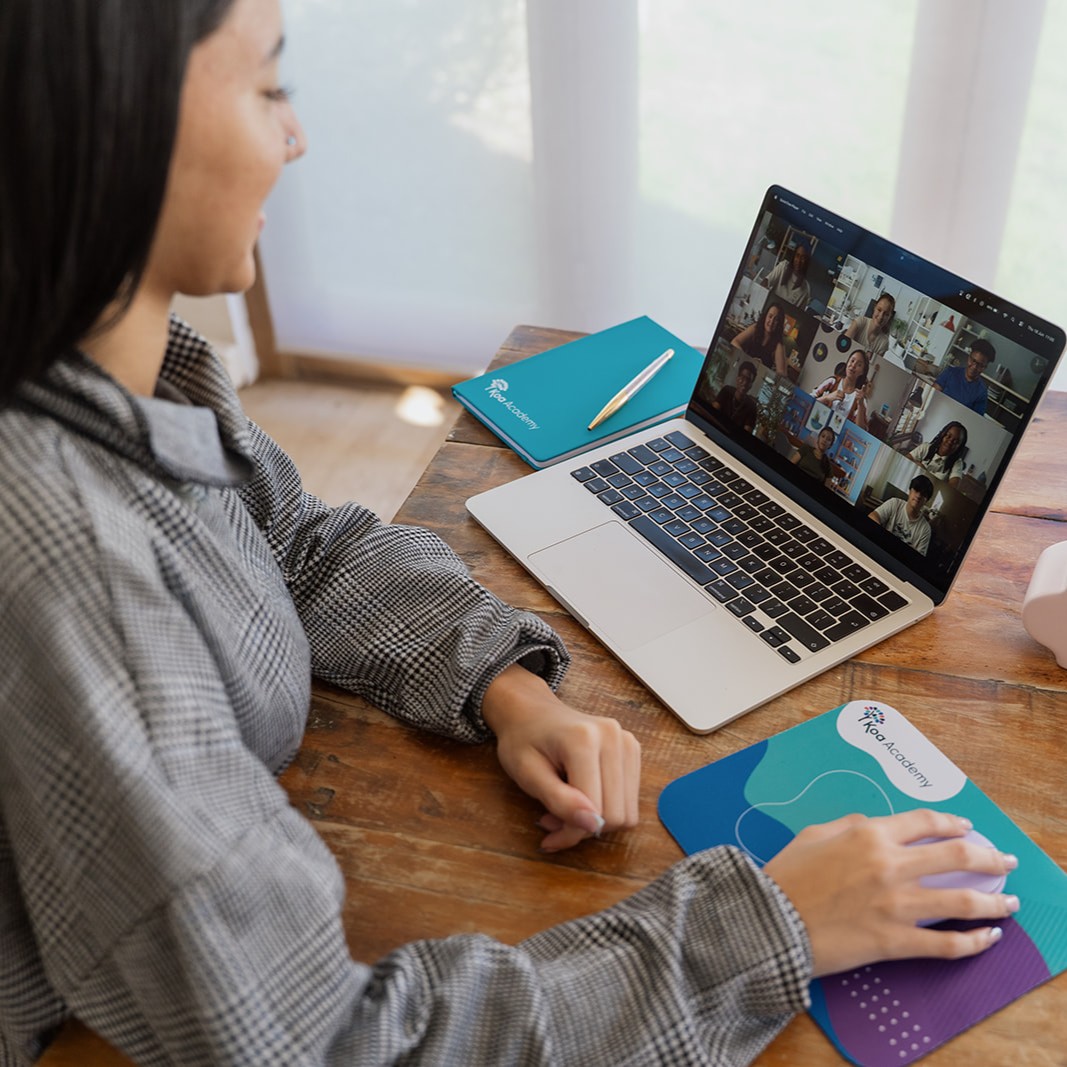
Every student belongs to a consistent Pod of eight. Students meet with the same smaller group regularly, giving them space to contribute, get to know one another and build shared experiences over time. Interactive live learning also creates opportunities for discussion, collaboration and participation across the school week.
Clubs, arts and culture initiatives, in-person socials and educational outings add further ways for students to connect. The flexibility of online schooling also gives families room to include sport, hobbies and community activities beyond Koa.
These opportunities are not interchangeable. Together, they give students different ways to participate, develop relationships and become part of a wider community.
Socialisation Is a Shared Responsibility
Socialisation is a shared responsibility between school and home. An online school should intentionally create opportunities for students to interact, build relationships and experience a sense of belonging through their day-to-day schooling.
Parents also play an equally important role in supporting their child’s social development through sport, hobbies, community activities and other in-person experiences. One of the advantages of online schooling is the flexibility it gives families to pursue these opportunities alongside school.
For a more detailed explanation of the different ways connection is supported, read How Does Socialisation Work in Online School? or explore the Socialisation at Koa page.
Looking Beyond What Is Easiest to See
Clubs, extracurricular activities and in-person events provide visible opportunities for students to connect. They deserve to form part of a parent’s assessment – but they should not be the entire assessment.
These visible opportunities are important, as are the parts of socialisation built into the day-to-day schooling experience: regular interaction, active participation, ongoing relationships and teachers who notice when a student becomes unusually quiet.
To understand whether an online school supports healthy socialisation, parents need to consider both the opportunities offered beyond lessons and the interaction and relationships that form part of day-to-day schooling.
The real measure is the overall social experience created for students. It is whether they are given regular, meaningful opportunities to participate, connect and belong.
